
How is warehouse shelf addressing done?
Shelf addressing means giving every shelf slot in the warehouse a unique name, then both labeling the shelf with that name and writing it on the product record. The most common scheme has three levels — aisle-shelf-level — and reads like A-03-2: aisle A, shelf 3, level 2. Setting it up takes four physical steps (lettering, numbering, level order, labeling) and one recording step.
Addressing isn't done to make the warehouse look tidy, but to eliminate searching for products. In a warehouse without addresses, staff memory finds the goods; when that person goes on leave, the warehouse stops working.
How do you read an address?
Each part of a three-level address answers a single question:
| Part | What it tells you | Example | How it is assigned |
|---|---|---|---|
| A | Aisle (or wall) | A, B, C | Letters from left to right as seen from the entrance door |
| 03 | Which shelf along the aisle | 01, 02, 03 | From the entrance end to the back, two digits |
| 2 | Which level (slot) of the shelf | 1, 2, 3 | Bottom to top |
Shelf addressing in five steps
1. Letter the aisles
Entering the warehouse from the door, give each aisle a letter moving from left to right: A, B, C. Write the letter on the wall at each end of the aisle or at the head of the shelf, large enough to be read from a distance. In small warehouses with a single row of shelves, lettering the walls instead of aisles does the same job (wall A, wall B). When choosing letters, don't use the warehouse's section names — names like "Cold room" or "Stationery" become meaningless when the product group changes, while the letter doesn't.
2. Number the shelves and fix the direction
In each aisle, number the shelves 01, 02, 03 starting from the entrance end. Write the number with two digits: 03 instead of 3. If you write single digits, 10 ends up next to 2 when the list is sorted and the count sheet doesn't follow shelf order. Choose a counting direction once (always from the entrance toward the back) and keep the same direction in all aisles; switching direction from aisle to aisle is the source of the most common mistake new staff make.
3. Count the levels from bottom to top
Give the levels (slots) of the shelf 1, 2, 3 starting from the bottom. The reason for counting from the bottom is practical: the lowest level exists on every shelf, the top level doesn't. If you start counting from the top, level 1 of a four-level shelf and level 1 of a three-level shelf end up at different heights. After these three steps your address takes the form A-03-2: aisle A, shelf 3, level 2.
4. Label — at eye level and in a readable size
If the address isn't physically written on the shelf, there is no addressing. Stick the label on the level edge, where the eye naturally falls; in dusty or humid warehouses, cover it with clear tape. Write the label large: a label that can't be read from two meters away still makes staff walk up to the shelf. If you can print barcode labels, do — scanning the address during a count is both faster and more accurate than typing it.
5. Write the address in the record and keep the one-address rule
A physical address with no counterpart in the record is useful only to the person who knows that shelf. Enter the address in the product record too, and set this rule: one product, one address. If you have to split the same product across two slots, write the second address in the record as well; if you don't, goods that show up as missing ("not found") in a count are actually on the second shelf. When a new product is created, assign its address the same day — a product created without an address ends up, within a few weeks, in the warehouse's shared "somewhere over there" area.
Shelf addressing examples: how many levels do you need?
The number of levels depends on the size of the warehouse. The rule is: use the fewest levels that are enough to tell locations apart. An extra level means one more field left unfilled every time a product is created.
| Warehouse | Address format | Example | When to choose it |
|---|---|---|---|
| Small warehouse with a single row of shelves / back of a shop | Shelf-level | 03-2 | No aisles, shelves on a single wall |
| Mid-size warehouse with a few aisles | Aisle-shelf-level | A-03-2 | The most common use |
| Warehouse with several pallets in one slot | Aisle-shelf-level-pallet | A-03-2-01 | Different products together in the same slot |
| Business with more than one warehouse | Warehouse-aisle-shelf-level | D2-A-03-2 | The same product can be held in two separate buildings |
Whichever format you choose, use the same one across the whole warehouse and don't change the separator (hyphen, dot, space). In a warehouse where half the addresses are written A-03-2 and half A032, addresses can't be sorted and search doesn't work.
Fixed address or dynamic address?
There are two methods, and the choice comes less from the size of the warehouse than from record-keeping discipline.
| Topic | Fixed address | Dynamic address |
|---|---|---|
| Product location | Doesn't change, is memorized | Incoming goods go into an empty slot |
| Shelf space use | Empty slot sits waiting | More efficient |
| Record-keeping requirement | Goods can be found even if records lag | Every movement must be entered immediately |
| New staff | Can work with the list right away | Can only work with the system |
| Best suited for | Most small and mid-size warehouses | Warehouses with a wide product range and records that never slip |
Don't try dynamic addressing in a warehouse whose records slip during the day: the system is the only source that knows where the goods are, and if the system is incomplete, the goods are effectively lost.
Which product goes on which shelf?
Once the address scheme is in place, the next question is placement. Three rules are enough. Keep fast-moving products near the door: the distance walked most during the day is walked for these products. Keep frequently picked products at waist height: bending and climbing a ladder take up most of the picking time. Keep heavy products on the bottom level: it is a matter of both safety and speed.
Don't decide which products move fast by guessing; measure. The ratio that tells you this is inventory turnover: bring items with high turnover close to the door, and move those that haven't turned over for months to the far slots. The shelf layout is reviewed a few times a year based on this measurement.
Four common mistakes
Writing the shelf number with a single digit. When addresses written like A-3-2 are sorted, shelf 10 ends up next to shelf 2 and the count sheet doesn't follow shelf order. Writing the address into the product name. A product name like “A4 Paper (A-03-2)” makes past records show wrong data when the product changes shelf. Sticking the label on once and forgetting it. A label that is worn off, has fallen, or is covered by boxes is ignored; make checking labels the first item on the list on count day. Leaving a “temporary” area with no address. An area left without an address in a corner of the warehouse becomes permanent, and most count discrepancies come from there.
How do you keep the address in the record?
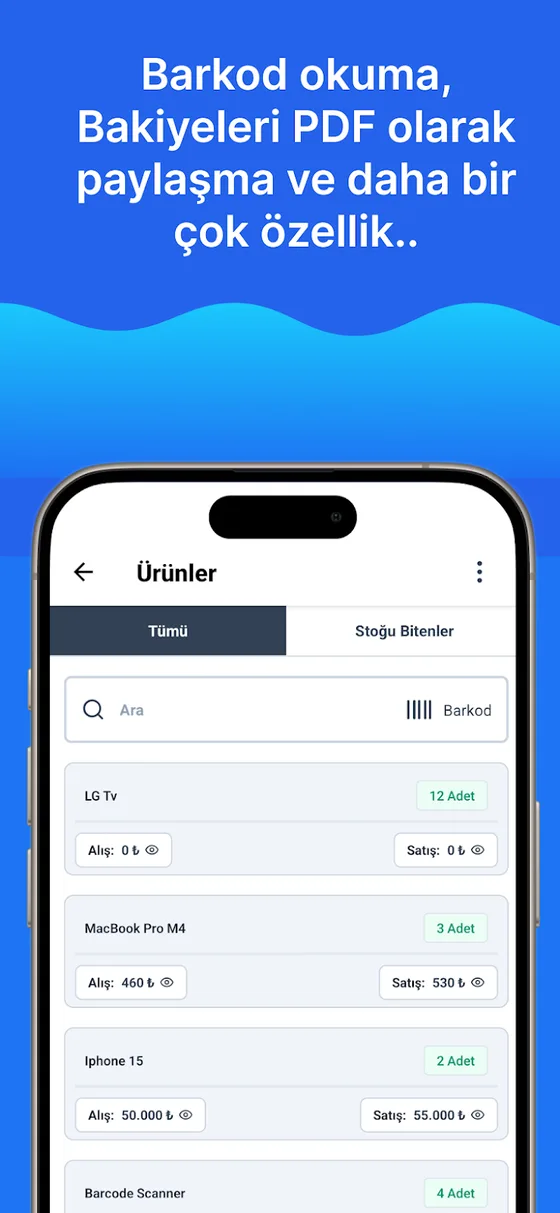
Ofisx's product card has no separate field called “shelf”; you track the address by writing it into the product code or the product category. Writing it in the code has a practical benefit: when the product list is sorted by code it is also sorted by shelf order, and the count list automatically follows the warehouse route. Writing it in the category makes it easier to filter by aisle.
To see what the barcode in/out, reorder level and count screens do, look at the features page; for working in the warehouse with a phone, see the mobile and web versions. If you are doing addressing before you have set up a record system, first complete the five steps in the how to track warehouse stock guide; an address means nothing for a product that has no record. We explain how placement is one of the four processes of warehouse management and how it connects to the others in the what is warehouse management guide.
Frequently asked questions
What is shelf addressing?
Giving every shelf slot in the warehouse a unique, unchanging name, labeling the shelf with that name, and showing it on the product record too. Its purpose is to be able to say where goods are without having to search: in a warehouse with no addresses, staff memory finds the product; in a warehouse with addresses, the list does.
How do you set up shelf addressing?
Start with three levels: a letter for the aisle (A), a two-digit number for the shelf (03), a number for the level (2). The result is an address in the form A-03-2. Label the shelf with the address and write it on the product record. As the warehouse grows you add levels; setting up a four- or five-level scheme from the start produces complexity you won't use.
What should shelf addressing examples look like?
A-03-2 (aisle-shelf-level) is the most common for small and mid-size warehouses. In very small warehouses with a single row of shelves, A-03 (shelf-level) is enough. In large warehouses that work by pallet, a fourth level such as A-03-2-01 (pallet order within the slot) is added. In all three the rule is the same: levels are always written in the same order and with the same separator.
Should an address use letters or digits?
So they don't get mixed up, make the levels different types: a letter for the aisle, digits for the shelf and level. If everything is digits (03-03-2), it isn't clear when reading which field is which. Avoid the letters I and O; they are confused with 1 and 0.
Fixed address or dynamic address?
In small and mid-size warehouses, a fixed address (every product has an unchanging place) is almost always the right choice: staff memorize locations, counts get faster, and newcomers work from the list. A dynamic address (incoming goods go into whichever slot is free and the address is written to the record) uses shelf space more efficiently but requires every movement to be entered in the system immediately and without exception. In a warehouse whose records slip during the day, a dynamic address makes goods vanish completely.
Which product should go on which shelf?
Fast-moving products go in the slots nearest the door and the shipping area, at waist height; slow-moving ones go in far and high slots. Heavy products are always placed on the bottom levels. Determine which products move fast by measuring, not guessing: inventory turnover is exactly the ratio that tells you this.
How does shelf addressing affect counting?
Its most visible benefit is in counting. When the count list is sorted by shelf address, the team finishes by walking through the warehouse once from start to end; without addresses, the same shelf gets counted twice and another not at all. We explain how to prepare for count day in the how to do a warehouse count guide.
Does Ofisx have a separate field for the shelf address?
The product card has no separate field called “shelf”; you track the address by writing it into the product code (like RAF-A032-…) or the product category. When you write it in the code, a product list sorted by code is also sorted by shelf order.
Last updated: 2026-09-16
Addressed products in the app
Product card, barcode in/out and count screens.



Tie the address to the record
Open a free account, import your Excel list and add the addresses to the product codes.