
What is FIFO?
FIFO (First In, First Out) is the “first in, first out” rule: goods that entered the warehouse or the shelf first are sold or used first. In a warehouse or a store it means placing newly arrived goods behind the older ones and always picking from the older stock at the front, which reduces waste from expired or aged products. In accounting, the same name is also used for the inventory valuation method in which the cost of goods sold is calculated from the oldest purchase price.
A box forgotten at the back of a shelf is a loss nobody notices until count day. FIFO is the oldest and cheapest warehouse rule that prevents it; it needs no software and no extra equipment, only a habit. This guide explains how to apply FIFO on the shelf, how it differs from FEFO and LIFO, examples by industry, and what it means in accounting.
What does first in, first out mean?
When batches of the same product arrive at different times, the batch that arrived first goes out first. In a store, milk delivered yesterday is sold before milk delivered today; in a warehouse, the box that arrived last month ships before the one that arrived this month. The rule sounds natural but it does not happen by itself: newly arrived goods get put in the spot closest to the door and are the easiest to grab. FIFO is the discipline of reversing that convenience and putting the old goods in front.
The word FIFO is used in two different places. In the warehouse it is the physical order of the goods: which box leaves first. In accounting it is a calculation method: which purchase price the cost of the goods sold is based on. Both rest on the same logic but they are independent of each other; the shelf can be organized by FIFO while accounting uses a different method. This guide mostly covers shelf organization; the cost meaning is covered below with a short example.
FIFO, FEFO and LIFO compared
| Rule | What goes out first | Where it is used |
|---|---|---|
| FIFO — first in, first out | The goods placed on the shelf first go out first. | Grocery, food, cosmetics, any product whose packaging or model goes out of date |
| FEFO — first expired, first out | The expiry date is what counts, not the order of arrival. | Food, medicine, dairy; when a later batch can have a shorter expiry date |
| LIFO — last in, first out | The goods placed last go out first. | Non-perishable bulk goods that do not age: sand, gravel, brick, iron |
If batches always arrive with the same shelf life, FIFO and FEFO give the same result. If a later batch may have a shorter date, go by the date on the box rather than the order of arrival; the place to catch this is the expiry date check during goods receiving.
How to apply FIFO on the shelf: six steps
1. Stack new arrivals at the back or underneath
Before putting newly arrived goods on the shelf, pull the old goods forward and place the new ones behind them. With stacked boxes, the new box goes underneath. The rule is simple, but this is where it breaks down most often: a rushed employee puts the new box at the front because that is easier.
2. Write the date large on the box and the shelf
On the visible side of every box, write the arrival date with a thick marker, and for products with an expiry date, the expiry date. The person picking should not have to work out which box is older; the date should be readable at a glance.
3. Keep the same product at one address
When a product is spread over two shelves, you cannot tell which is older and a new batch gets opened before the old one runs out. If space is short, put the reserve stock in a higher bay and write its address in the product record; bring it down from above as the front bay empties.
4. Always pick from the box at the front
Whoever prepares an order or restocks the shelf takes the frontmost, oldest box. Pulling the “nicer looking” box from the back is the second most common habit that breaks FIFO.
5. Check items nearing their date once a week
Find products approaching their expiry date with a weekly walk-through; move them to the front, put them on sale, or, if you have agreed it with the supplier, return them. A product past its date is pulled from sale and recorded as waste.
6. Note the date during the count too
Writing the date of the oldest box next to the quantity during a count brings out the batch forgotten at the back of the shelf. If an old-dated box turns up at the back, the first step is not being followed.
If a product has no fixed address, the third step cannot be applied; setting up an address layout is covered in the shelf addressing system guide. How to record a product past its date is covered in the what is waste (shrinkage) guide.
FIFO examples by industry
| Where | How it is applied |
|---|---|
| Grocery store | For short-dated products such as milk, deli items and bread, new arrivals are placed at the back; the item at the front of the fridge is the one with the shortest date. The same rule applies to the snack shelf near the checkout. |
| Warehouse | Boxes are labeled with their arrival date, picking is done from the front bay, and reserve stock waits in a higher bay. In a pallet warehouse, racking systems that are loaded from the back and unloaded from the front apply FIFO automatically. |
| Restaurant and kitchen | The opening date and expiry date are written on every container that is opened; freshly prepared items go behind the older ones in the fridge. How long prepared ingredients can be used is determined by your business’s food safety plan. |
| Cosmetics and medicine | Because the expiry date can vary from batch to batch, FEFO is applied instead of FIFO: the date on the box counts, not the order of arrival. |
| Hardware, electronics, clothing | Even without an expiry date, packaging fades, models change and seasons pass. Letting old goods go out first prevents unsellable stock from piling up on the shelf. |
Calculating cost with the FIFO method
In accounting, when you buy the same product at different prices, FIFO calculates the cost of goods sold starting from the oldest purchase price. An example:
| Transaction | Quantity | Unit price | Amount |
|---|---|---|---|
| 1 March purchase | 100 units | 10 TL | 1.000 TL |
| 15 March purchase | 100 units | 12 TL | 1.200 TL |
| March sale | 150 units | — | — |
| Cost of goods sold under FIFO | 100 + 50 units | 10 TL and 12 TL | 1.000 + 600 = 1.600 TL |
| Remaining stock under FIFO | 50 units | 12 TL | 600 TL |
In the same example, the unit cost under the weighted average method is (1.000 + 1.200) ÷ 200 = 11 TL; the cost of goods sold is 1.650 TL and the remaining stock is 550 TL. When prices are rising, FIFO shows a lower cost and a higher profit. The three methods are compared in the inventory management guide; agree with your accountant which method to use in your financial records. To calculate the cost of goods sold and the value of the remaining stock from your own purchase batches — up to five different prices — you can use the FIFO cost calculator; the tool also compares the same figures against weighted average and LIFO.
FIFO in Ofisx
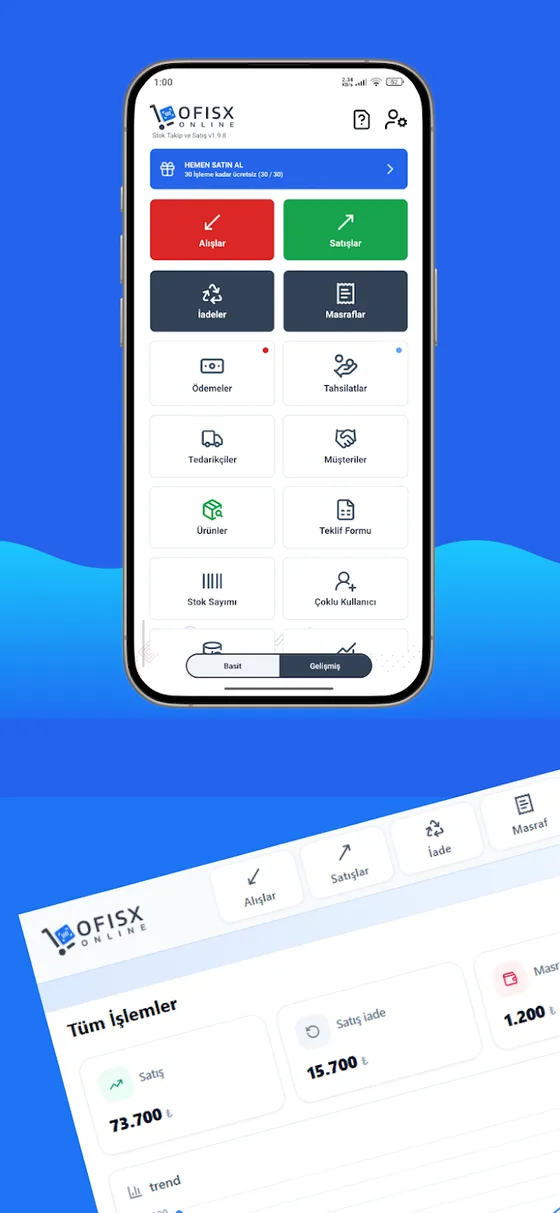
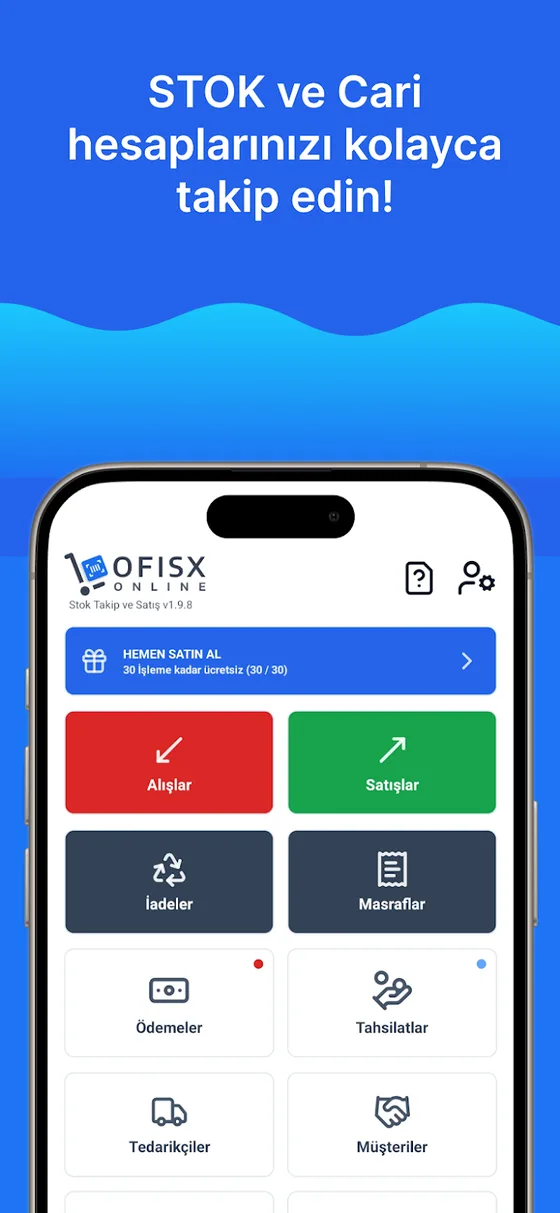
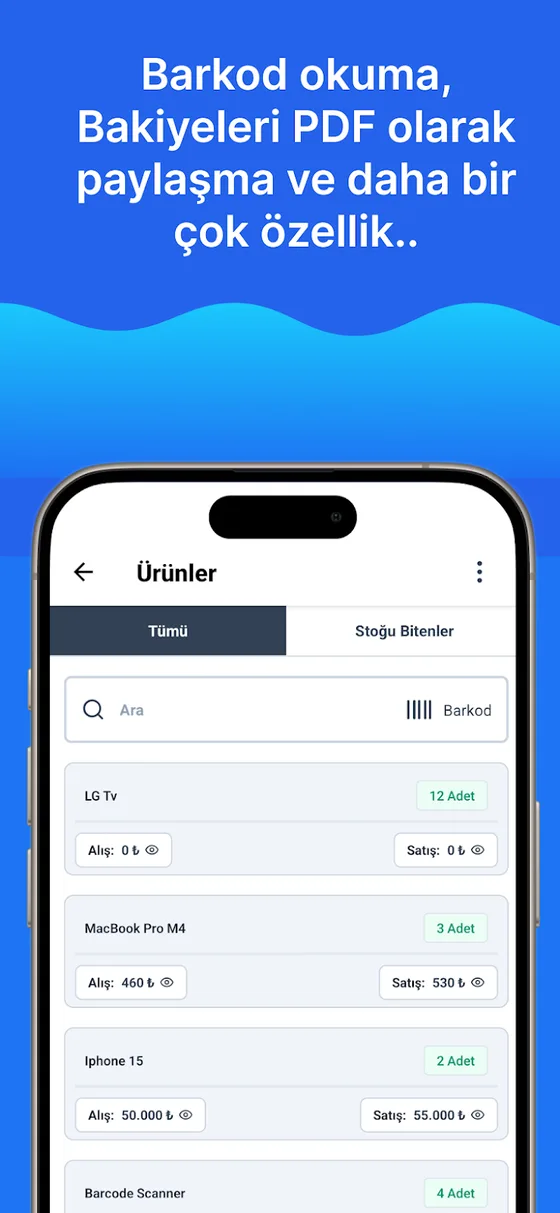
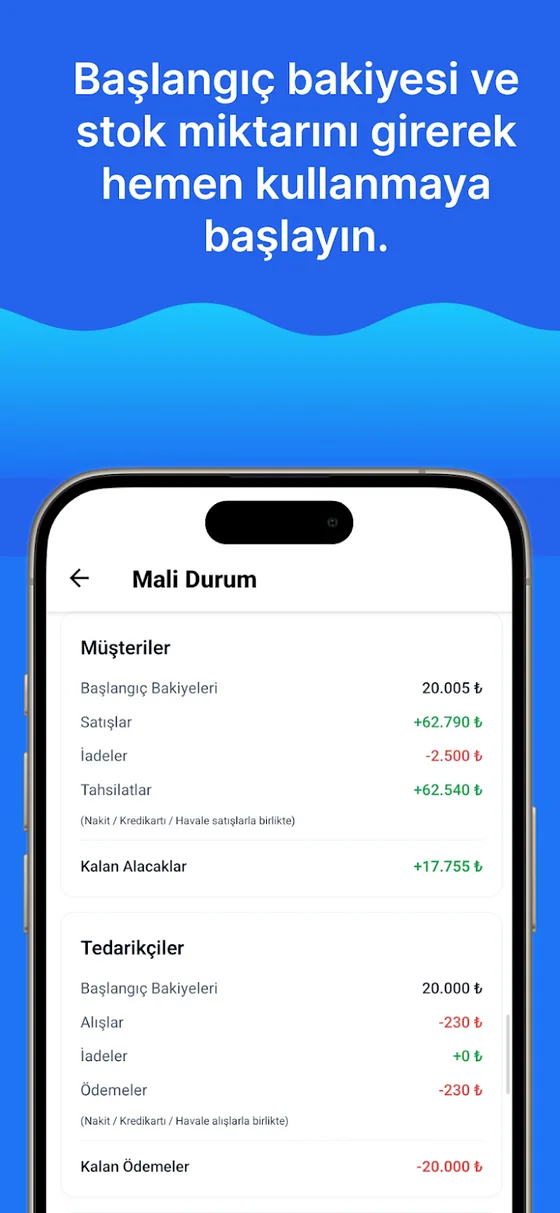
Ofisx has no batch or expiry date field; FIFO is an arrangement applied on the shelf, not in the software. The software keeps the stock quantity of each product: incoming goods are entered on the Purchase screen by scanning barcodes, and sales reduce the stock. A product that is past its date and pulled from sale is deducted from stock on the Stock Count screen by entering the quantity left on the shelf. You can write the shelf address of the reserve stock in the product name or category. The software’s other screens are on the features page.
Frequently asked questions
What is FIFO in short?
FIFO is the “first in, first out” rule: goods that entered the warehouse or the shelf first are sold or used first. In warehouses and stores it is a shelf arrangement that keeps old goods from being forgotten on the shelf and spoiling; in accounting it is the inventory valuation method in which the cost of goods sold is calculated from the oldest purchase price.
What does FIFO mean, and what does it stand for?
FIFO is the abbreviation of “First In, First Out” and is known in Turkish as “ilk giren ilk çıkar” (İGİÇ). Its opposite is LIFO: “Last In, First Out”.
What is the difference between FIFO and FEFO?
FIFO goes by order of arrival, FEFO (First Expired, First Out) goes by expiry date. If batches always arrive with the same shelf life, the two give the same result. If a later batch may have a shorter date — common with food and medicine — FEFO is applied and the product with the nearest date goes out first.
How is cost calculated under the FIFO method?
The quantity sold is deducted starting from the oldest purchase, in purchase order, and each portion is multiplied by its own purchase price. For example, if you bought 100 units at 10 TL, then 100 units at 12 TL, and sold 150 units, the cost of goods sold is 100 × 10 + 50 × 12 = 1.600 TL, and the value of the remaining 50 units is 50 × 12 = 600 TL.
How is FIFO applied in a kitchen or restaurant?
A date is written on every incoming and prepared item, new items are placed behind older ones in the fridge, and use always comes from the container at the front. For opened items, the opening date is written too; how long each item can be kept is determined by the business’s food safety plan.
Is it mandatory to apply FIFO?
There is no general requirement for it as a shelf arrangement; however, food safety systems for food businesses usually require product rotation. Which inventory valuation method is used in financial records depends on tax legislation; agree this with your accountant.
Does Ofisx have FIFO tracking?
Ofisx has no batch or expiry date field; for that reason FIFO is an arrangement applied on the shelf, not in the software. The software keeps per-product stock quantity, purchases, sales and counts; a product that is past its date and pulled from sale is deducted from stock on the Stock Count screen by entering the quantity left on the shelf.
Last updated: 2026-10-04
Purchases, sales and counts in the app
The shelf layout is up to you, the stock quantity is in the software: incoming and outgoing goods are recorded the moment they are scanned.
Know what is left on the shelf without waiting for count day
Open a free account; record purchases and sales by barcode, and per-product stock is updated with every movement.