
What is a dispatch note?
A dispatch note (sevk irsaliyesi, in Turkey) is the document that accompanies goods when they are moved from one place to another; it shows the type and quantity of the goods, from whom to whom and on what date they were sent. The sending party issues it, and the receiving party accepts the goods by comparing them with the quantity on the note. An invoice documents the price of the sale; a dispatch note documents the movement of the goods.
Every box that leaves the warehouse leaves with a document and enters the other side with a document. That document is often the dispatch note, issued before the invoice while the goods are still on the road. This guide explains what a dispatch note is for, who issues it, how it differs from an invoice and from a waybill (transport note), and how to ship from the warehouse with a dispatch note. For legal deadlines and penalty amounts, ask your accountant; we don't give figures here.
What is a dispatch note for?
A dispatch note answers three questions: which goods, how much, from whom to whom. During transport it shows who the goods belong to and where they are going; on delivery it is the recipient's checklist; and it is the basis for the invoice issued later. Its most important job for the warehouse is to prove that the goods that left match the outbound entry in the records: when a customer says “it arrived short”, the first document to look at is the copy of the note they signed.
Who issues the dispatch note?
The party sending the goods issues it. In a sale this is the seller; if goods are moved between branches or warehouses, it is the location the goods leave from. The buyer doesn't issue a dispatch note; they receive the goods by comparing them with the note — the steps are in the how to do goods receiving guide. When the buyer returns goods, they become the sender and put their own dispatch note alongside the returned goods.
What information does a dispatch note contain?
- the document's series and serial number,
- the issue date and the dispatch date (and time) when the goods actually set off,
- the sender's name or company name, address, tax office and tax number,
- the recipient's name or company name, address, tax office and tax number,
- the type and quantity of each item sent (with its unit, such as pieces, kilograms, boxes),
- the name and signature of the person delivering and the person receiving the goods.
Price information is not the main subject of a dispatch note; quantity is what matters. The full list of fields that must appear on the document and the extra information required on an e-dispatch note (e-irsaliye, the electronic version) depend on regulations; verify your form with your accountant.
Difference between a dispatch note, an invoice and a waybill
| Dispatch note | Invoice | Waybill (transport note) | |
|---|---|---|---|
| What it documents | The movement of the goods: what, how much, from whom to whom, when it went. | The price of the sale: which goods were sold at what price, with how much VAT. | The transport job: which carrier, with which vehicle, carried whose goods. |
| Who issues it | The party sending the goods (usually the seller). | The party selling the goods. | The carrier or courier company doing the transport. |
| Price information | Usually none; quantity is what matters. | Yes; unit price, amount and tax are written. | No goods price; transport details are written. |
| Does it travel with the goods? | Yes, it stays with the goods throughout transport. | If the goods are sent with the invoice, it goes with them; otherwise it is issued later. | Yes, it stays with the carrier. |
If the goods travel in your own vehicle, only the dispatch note goes with them. If they go with a freight company, the dispatch note and the waybill travel together: one documents the goods, the other the transport job.
Types of dispatch notes
| Type | When it is used |
|---|---|
| Printed dispatch note | Paper note. Printed with a series and serial number at a print shop authorized by the Ministry of Treasury and Finance, and filled in by hand or by printer. |
| e-Dispatch note (e-İrsaliye) | The electronic form of the same document. Issued through the GİB portal (Turkey's Revenue Administration) or a private integrator and delivered to the recipient electronically. Who must switch to it depends on regulations. |
| Invoice-dispatch note combined | The invoice and dispatch note merged into a single document. If the goods are sent with their invoice, no separate dispatch note is issued. |
| Consignment dispatch note | Used when goods are sent to a dealer or point of sale before being sold. An invoice is issued as the goods sell, and unsold goods go back with a dispatch note. |
| Dispatch note for goods sent by courier | The sender's dispatch note is placed with goods that go by courier. The shipment document given by the courier company relates to the transport job and does not replace the dispatch note. |
How do you ship from the warehouse with a dispatch note? Seven steps
1. Pick the order and count it item by item
Scan or count each item as you pick the order from the shelf. A missing item should come to light during picking, not at the customer's door.
2. Write the note by the quantity you picked, not the quantity ordered
If part of the order isn't in stock, write only the quantity actually shipping on the dispatch note; the remainder goes in a separate shipment with its own note. A note written with the ordered quantity is the most common cause of an “it arrived short” dispute with the customer.
3. Write the box count and label the boxes
Add the total number of boxes to the note and write the note number on each box. The receiver won't sign without counting the boxes; having the number on the document makes this check easier.
4. One copy goes with the goods, one stays in the warehouse
One copy of the note stays with the goods throughout transport, the other stays with you. The copy in the warehouse is the proof of shipment and the basis for the invoice issued later.
5. Get the person delivering the goods to sign
If the goods go in your vehicle, note the driver's name; if with a freight company, the carrier's name and the plate number, and have them sign the warehouse copy. For courier shipments, write the tracking number next to the note number.
6. Deduct the shipment from stock the same day
Goods that leave the warehouse must also be deducted from the stock record the same day. Goods that are no longer on the shelf but still show in the records are goods that get promised on the next order because they are assumed to be “in stock”.
7. Close out the delivery
When the copy signed by the recipient or the delivery confirmation arrives, mark the shipment as “delivered”; a copy that doesn't come back is an open shipment that needs to be followed up.
To track in one table which shipment is on the road, which has been delivered and which is late, the free shipment tracking Excel template can be used, with columns for the dispatch note number, vehicle or courier tracking number, and delivery status. For handing goods leaving the warehouse over against a signature, there is also a warehouse in/out slip.
The three most common mistakes
- Writing the note with the ordered quantity. An under-picked order looks as though it went out in full; the difference shows up at the customer.
- Not deducting the shipment from stock. The note was issued but the record wasn't updated; on count day stock comes out too high. To find where the difference comes from, see the warehouse count guide.
- Not keeping the warehouse copy. In a delivery dispute you have no signed document left.
Dispatch notes in Ofisx
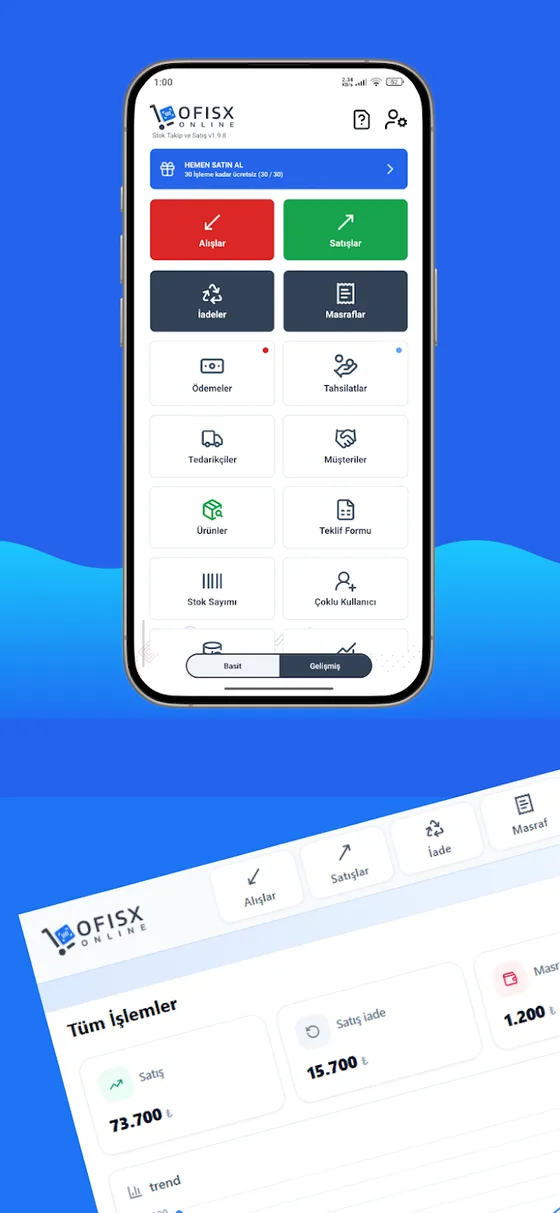
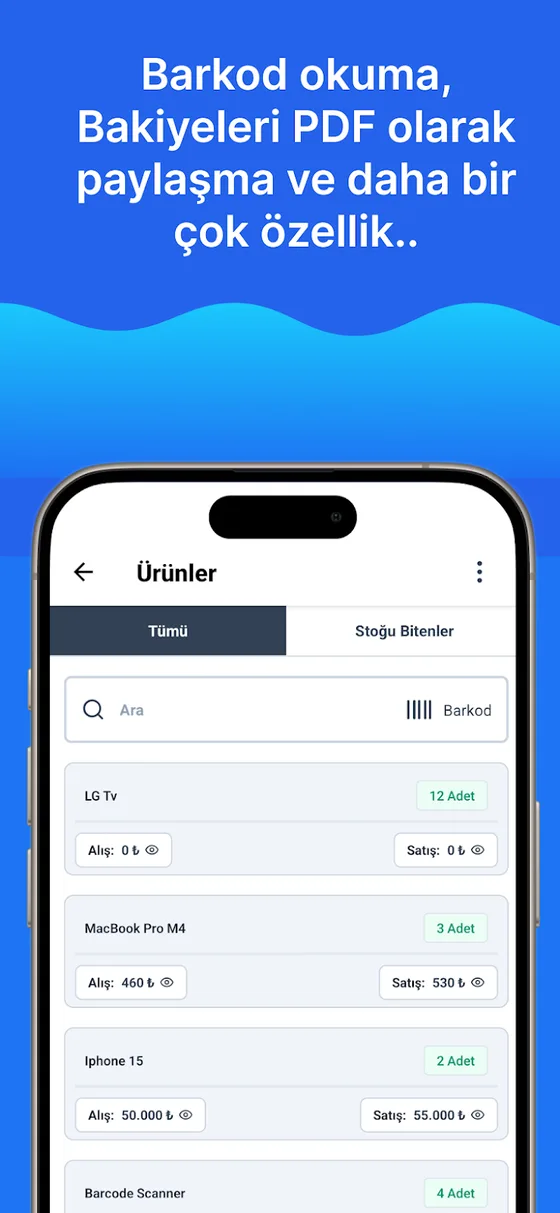
Ofisx has no screen for issuing dispatch notes; the note is issued separately, either printed or as an e-dispatch note. The program handles the stock side of the job: goods arriving from a supplier with a dispatch note enter stock on the Purchases screen by scanning barcodes, goods sold are deducted from stock, and each product's movement history is visible. The program's other screens are on the features page.
Frequently asked questions
What is a dispatch note, in short?
A dispatch note is the document that accompanies goods when they are moved from one place to another; it shows the type, quantity, from whom to whom and on what date the goods were sent. An invoice documents the price of the sale, a dispatch note documents the movement of the goods.
Who issues the dispatch note?
The sending party issues it; in a sale this is the seller. The receiving party doesn't issue a dispatch note; they accept the goods by comparing them with the quantity on the note. When the buyer returns goods, they become the sender and put their own dispatch note alongside the returned goods.
What is the difference between a dispatch note and an invoice?
An invoice documents the price of the sale — price, amount and tax; a dispatch note documents the movement of the goods, that is, how much was sent from whom to whom. A dispatch note usually carries no price. If the goods are sent with their invoice, an invoice-dispatch note that combines the two can be used.
What is the difference between a dispatch note and a waybill?
The dispatch note is issued by the party sending the goods, the waybill by the carrier doing the transport. The dispatch note documents the goods, the waybill the transport job. When goods are sent with a freight company, both travel with the goods.
What is a consignment dispatch note?
The note used when goods are left with a dealer or point of sale before being sold. An invoice is issued as the goods sell at that point; the unsold part is sent back, again with a dispatch note. Consignment goods need to be tracked separately in the stock record, because they are not physically in your warehouse but are still yours.
Where do you get a dispatch note?
Printed dispatch notes are produced with a series and serial number at print shops authorized by the Ministry of Treasury and Finance. An e-dispatch note (e-İrsaliye) is issued through the GİB portal (Turkey's Revenue Administration) or a private integrator. Decide which one you must use together with your accountant.
What is the penalty for not issuing a dispatch note?
Penalty amounts are set by Turkey’s Tax Procedure Law and are updated every year; this guide does not give current figures. For the current amount and the deadlines for issuing a dispatch note (irsaliye), ask your accountant or the Revenue Administration.
Can I issue a dispatch note with Ofisx?
No. Ofisx has no screen for issuing dispatch notes; the note is issued separately, either as a pre-printed paper note or as an e-irsaliye (electronic dispatch note). The app records the goods received with the note into stock and deducts the goods sold from stock.
Last updated: 2026-10-06
Purchases, sales and counts in the app
You keep the dispatch note, the app keeps the stock quantity: goods coming in and going out are recorded the moment they are scanned.


See what leaves the warehouse in your records too
Open a free account; record purchases and sales by barcode, and per-product stock is updated with every movement.